A Map for the Lost River
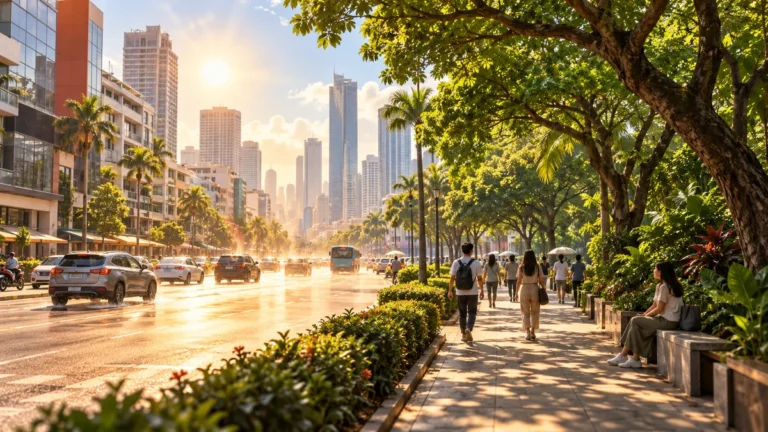
Kredit imej: NilamOnline / Edura Creative — ilustrasi dijana dengan AI
The old map fell from the cupboard just as Nadia was reaching for a box of coloured paper.
It landed at her feet with a soft flap.
“What's this?”
She picked it up carefully.
The paper was yellow at the edges and folded into four uneven squares. Across the middle ran a thin blue line. Someone had written a name beside it in faded black ink.
Sungai Meranti.
Nadia stared at the words.
She knew almost every road around Kampung Meranti. She knew the small grocery shop near the junction, the football field behind the mosque and the narrow path that led to her grandmother's house.
But she had never heard of a river called Sungai Meranti.
Her grandfather was sitting on the veranda, repairing the handle of an old gardening tool.
Nadia hurried outside.
“Tok, was there a river here?”
Her grandfather looked up.
“Of course there was.”
“Where?”
He pointed towards the row of trees beyond the village road.
“Behind the old rubber land.”
Nadia glanced in that direction.
There was no river there.
Only bushes, a narrow dirt track and several new houses further away.
“But there's nothing there now.”
Her grandfather stopped working.
For a moment, he seemed to be looking at somewhere much farther away than the trees.
“There used to be.”
The map stayed on Nadia's desk that night.
She should have been finishing her mathematics homework, but the blue line kept catching her eye.
It began near the hills, curved past the village and continued towards a larger river several kilometres away.
Beside one bend was a small drawing of a bridge.
Nadia leaned closer.
The bridge was marked near the place where the community hall now stood.
The next morning, she brought the map to school.
Her best friend, Izz, examined it during recess.
“A lost river?” he said. “That sounds like a treasure hunt.”
“It isn't lost treasure.”
“Could still be treasure.”
Nadia rolled her eyes.
Their science teacher, Mrs Tan, happened to walk past their table.
“What are you two studying so seriously?”
Nadia showed her the map.
Mrs Tan looked at it for longer than Nadia expected.
“Where did you find this?”
“My grandfather's house.”
Mrs Tan traced the blue line with one finger.
“Old maps can tell us a lot about how a place has changed.”
“So the river really existed?”
“Most likely. But if you want to know what happened to it, don't rely on one map.”
Nadia frowned.
“What else should we look for?”
Mrs Tan smiled.
“That is the right question.”
That afternoon, Nadia and Izz began with the oldest person they knew.
Nadia's grandmother laughed when she saw the map.
“We washed our feet in that river after walking home from school,” she said.
“Was it big?”
“Not very. But the water was clear enough to see small fish.”
“What happened to it?”
Her grandmother shook her head.
“It became smaller. Then people stopped talking about it.”
That answer was not enough for Nadia.
She spoke to Pak Rahman, who ran the grocery shop.
He remembered catching tiny prawns there as a boy.
Auntie Mei, who lived near the community hall, remembered an old wooden bridge.
“After the new road was built, some parts were covered,” she told them.
“Covered?” Nadia asked.
“With drains and pipes, I think. It was a long time ago.”
Each person remembered something different.
Yet all their stories pointed to the same thing.
The blue line on the map had once been real.
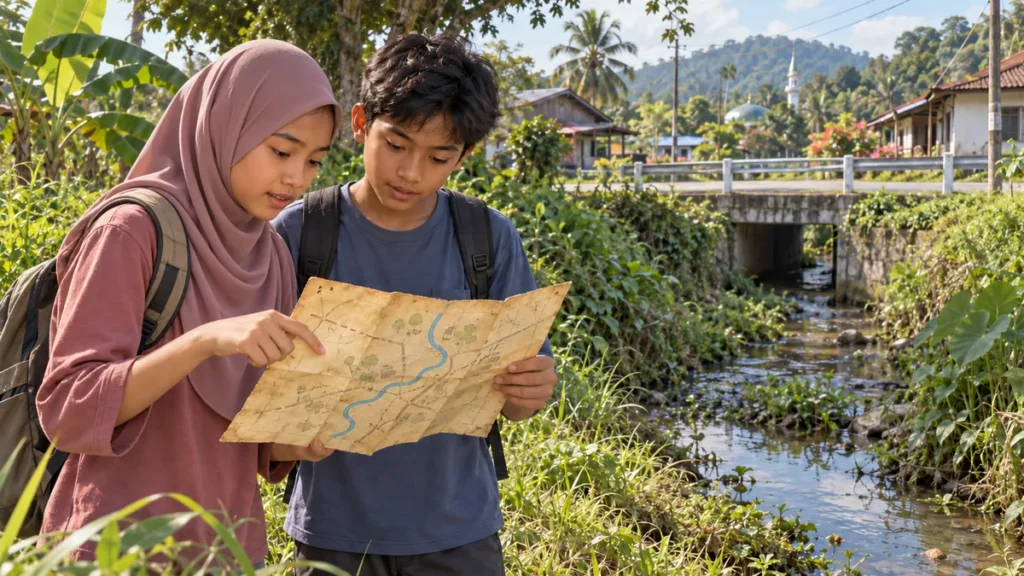
On Saturday morning, Nadia and Izz followed the route shown on the map.
They began near the old rubber land.
At first, there was nothing unusual.
Then Izz stopped.
“Listen.”
Nadia heard it too.
Water.
Not the loud rush of a river. Just a faint trickling sound beneath the grass.
They pushed aside several long leaves.
A narrow stream of muddy water ran through a shallow channel.
“This can't be the river,” Izz said.
Nadia unfolded the map.
They were standing almost exactly where the blue line began.
They followed the channel.
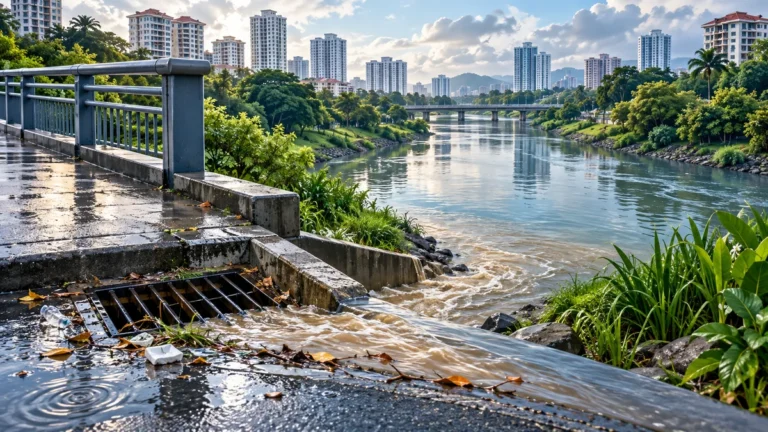
Sometimes the water disappeared beneath concrete pipes. In other places, it ran beside the road like an ordinary drain.
Near the community hall, the channel widened.
Plastic bottles, food wrappers and fallen branches had collected against a metal grate.
Izz stared at the mess.
“So this is Sungai Meranti?”
Nadia did not answer.
The river on the map had been drawn as a smooth blue line.
The water in front of them was barely moving.
It was difficult to believe they were looking at the same place.
Nadia took photographs.
On Monday, she showed them to Mrs Tan.
“We found it,” she said.
Mrs Tan looked through the pictures.
“You found part of it.”
“What do you mean?”
“A river is more than the water we can see in one place. Its path may have been redirected, covered or changed over many years.”
Nadia looked again at the old map.
“So we can't just clean that one spot and say the river is back.”
“Exactly.”
That disappointed her.
She had imagined removing the rubbish and watching clear water suddenly rush through the village again.
Real problems, she realised, did not always end that neatly.
“But the rubbish shouldn't be there, right?” asked Izz.
“No,” Mrs Tan said. “And that is something you can do something about.”
The following week, Nadia's class began a small project.
Not a “Save the River” campaign.
Mrs Tan said the name was too grand for something they did not yet fully understand.
Instead, they called it:
Where Did Sungai Meranti Go?
The pupils interviewed older residents.
They compared old photographs with new ones.
They marked places where water still appeared.
They spoke to the village committee about the rubbish near the grate.
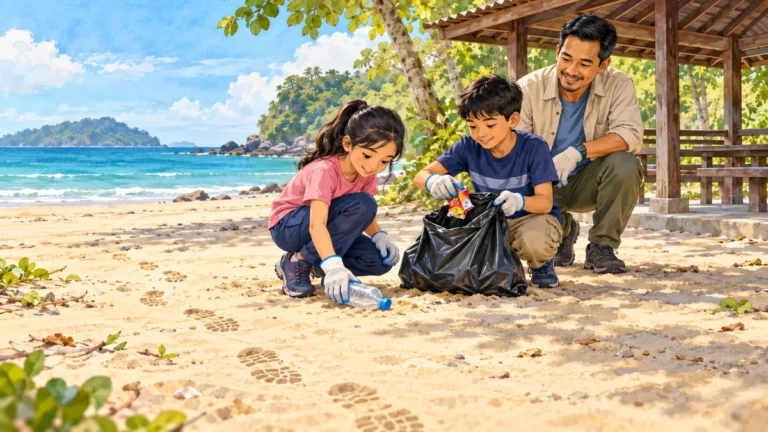
With help from adults, the area was cleaned.
Three bags of plastic waste, an old bucket and even one broken chair were removed.
The water did not suddenly turn crystal clear.
No fish appeared.
The forgotten river did not magically return to the way Nadia's grandmother remembered it.
But after the blockage was cleared, the water moved more freely.
For Nadia, that mattered.
A month later, the class displayed their project during the school's community day.
In the centre of the display were two maps.
The first was the old one Nadia had found.
The second had been drawn by the pupils.
Their new map showed roads, houses, drains, covered sections and the small stretches of flowing water they had discovered.
A visitor studied both maps.
“So which one is the real Sungai Meranti?” he asked.
Nadia thought for a moment.
“Both.”
The man looked surprised.
“The old map shows what the river used to look like,” she explained. “Ours shows what happened to it.”
Her grandfather, standing a few steps away, smiled.
That evening, Nadia returned the old map to him.
“You keep it,” he said.
“Really?”
“You found more use for it than I ever did.”
Nadia carried it to her room.
She placed it beside the new map made by her class.
The old blue line was faded and incomplete.
The new one was covered with notes, arrows and questions they had not answered yet.
Nadia no longer thought of Sungai Meranti as a river that had simply disappeared.
Some of it was hidden. Some had changed. Some was still flowing quietly beneath a place where people had stopped noticing it.
She ran her finger along the faded blue line.
The river had not needed a map to exist.
But perhaps the village had needed a map to remember it.
Values
- Curiosity — Nadia keeps asking questions instead of accepting the first answer.
- Responsibility — the pupils take practical action within what they can realistically do.
- Respect for community history — old memories and records help them understand how their surroundings have changed.
Uji Kefahaman
Cuba jawab tanpa melihat semula terlebih dahulu.
Aktifkan JavaScript untuk menjawab kuiz interaktif.
Fikir & Jawab
Bina Rumusan Anda
Cuba tulis 2–3 ayat menggunakan perkataan sendiri.
- Why did Nadia initially think Sungai Meranti had disappeared completely?
- What did Nadia learn from interviewing older villagers?
- Why did Mrs Tan say that cleaning one place would not bring the whole river back?
- How were the old map and the pupils' new map different?
What do you think Nadia means when she says the village needed a map to remember the river?
Catatan ini tidak dihantar atau disimpan oleh NilamOnline. Salin catatan sendiri sebelum meninggalkan halaman jika mahu menyimpannya.
Maklumat Bacaan
- Tajuk
- A Map for the Lost River
- Pengarang
- Aqilah N.A
- Penerbit
- Edura Creative
- Tahun
- 2026
- Bahasa
- Bahasa Inggeris
- Jenis
- Cerita Digital
Salin secara manual
Anda akan dibawa ke portal rasmi AINS dalam tab baharu. NilamOnline bukan portal rasmi AINS atau KPM.