What Makes an Energy Source Sustainable?
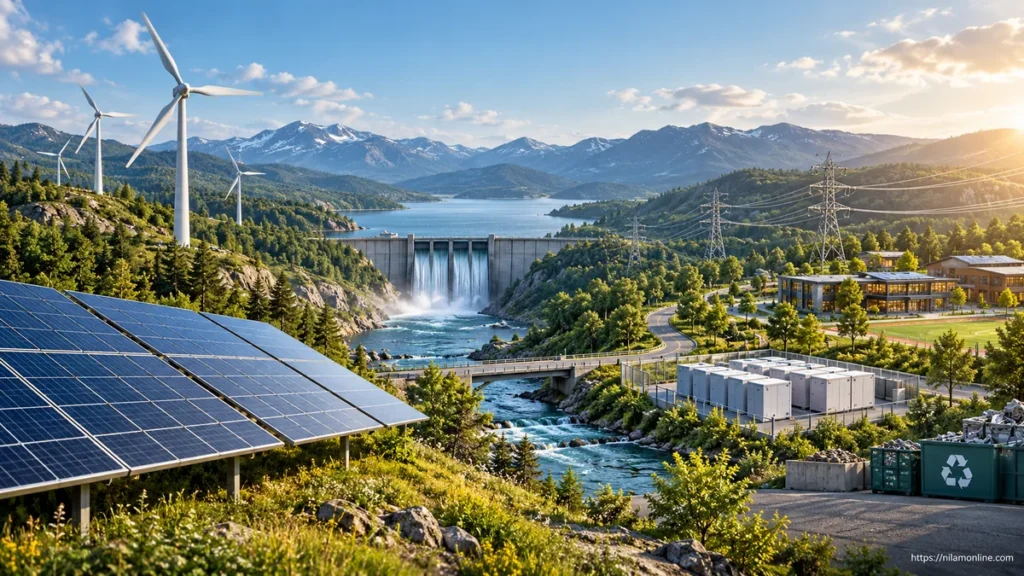
Kredit imej: AI-generated for Nilam Online / Edura Creative
🏫 Sokong sekolah anda dalam Liga Membaca Nilam Online
Pilih sekolah anda supaya bacaan anda nanti boleh membantu sekolah naik dalam ranking bulanan.
🏫 Sekolah Anda
Anda masih boleh membaca tanpa memilih sekolah.
Taip sekurang-kurangnya 2 aksara, kemudian pilih sekolah daripada hasil carian.
The island-school scenario below is hypothetical.
Imagine a school on a small island. Its classrooms need lights, fans, computers and an internet connection. The school also needs electricity to keep food fresh and operate essential equipment.
For years, the school has depended on a diesel generator. It can produce electricity when fuel is available, but delivering diesel to the island is expensive. The generator is noisy, requires maintenance and releases exhaust gases.
One day, someone suggests installing solar panels.
“Solar power is sustainable,” a student declares. “It comes from the Sun, so it must be the best choice.”
Another student disagrees.
“What happens at night? And what about the materials used to make the panels?”
Both students have raised important points.
Solar energy can be an excellent choice, but deciding whether an energy source is sustainable requires more than knowing where its energy comes from.
We must ask how that energy is produced, how reliably it can be delivered, what it costs, whom it affects and what happens to the equipment when its useful life ends.
A sustainable energy source helps meet present energy needs without creating unacceptable environmental, economic or social burdens for the future.
That sounds straightforward. In practice, it requires careful decisions.
Renewable Does Not Automatically Mean Sustainable
We often hear two words used together: renewable and sustainable.
They are related, but they are not identical.
A renewable energy source is replenished by natural processes on a human timescale. Sunlight, wind and flowing water are common examples.
Fossil fuels such as coal, oil and natural gas are different. They were formed through geological processes over extremely long periods and cannot be replaced quickly enough to match human consumption.
This makes renewable energy important for long-term energy planning.
However, an energy source can be renewable and still cause environmental damage if it is poorly developed or managed.
Consider a hydroelectric dam. Flowing water is a renewable resource, and hydropower can generate electricity with relatively low greenhouse gas emissions over its lifetime. Yet a large dam can also change river flow, interfere with fish migration and flood surrounding land.
Bioenergy provides another example. Wood and agricultural materials can be replenished through biological growth. But harvesting forests faster than they regenerate, or converting valuable natural habitats into energy crops, can create serious sustainability problems.
Renewability answers one question:
Will the energy resource be replenished?
Sustainability asks a much wider question:
Can we continue using this source while protecting people, ecosystems and the needs of future generations?
The distinction matters because no energy technology should receive an automatic environmental approval simply because it carries a renewable label.
The Climate Test: What Happens to the Atmosphere?
One of the most important ways to assess an energy source is to examine its greenhouse gas emissions.
Coal and natural gas contain carbon. Burning these fuels releases carbon dioxide, a greenhouse gas that contributes to global warming.
Natural gas combustion generally produces less carbon dioxide per unit of energy than coal combustion, but gas systems can also release methane during production and transportation. Methane is itself a powerful greenhouse gas.
Solar panels and wind turbines, by contrast, generate electricity without burning fuel during normal operation.
That is a major advantage.
However, scientists do not stop their calculations at the power plant.
They also examine emissions from manufacturing equipment, obtaining materials, building facilities and eventually dismantling them.
The Intergovernmental Panel on Climate Change (IPCC) identifies solar, wind and other low-emission electricity technologies as important options for reducing energy-system emissions. Source: IPCC
Yet climate impact is only one part of sustainability.
A technology might have a relatively small carbon footprint while still creating substantial harm through poor land management, water pollution or unsafe labour practices.
Therefore, a serious evaluation looks beyond the question, “Does this power station produce smoke?”
It asks, “What is the total climate impact of producing the electricity we use?”
Looking at the Whole Life Cycle
Imagine buying a new solar panel.
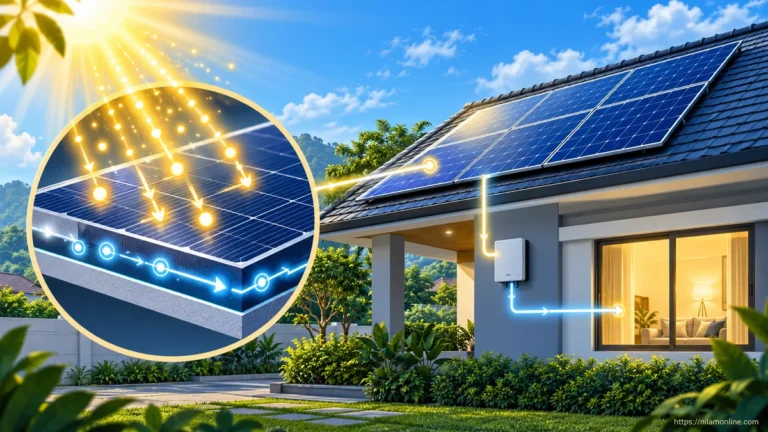
When the panel is operating, it does not need to burn coal or gas to produce electricity.
But how did it arrive on the roof?
Materials had to be extracted. Factories used energy to produce the components. Vehicles transported the finished panel. Workers installed it, and eventually the panel will need to be repaired, reused, recycled or disposed of.
Scientists examine these stages using a method called life-cycle assessment (LCA).
An energy technology's life cycle commonly includes:
- Extracting and processing raw materials.
- Manufacturing the equipment.
- Transporting and installing it.
- Operating and maintaining the system.
- Decommissioning, reusing or recycling materials at the end of its life.
Life-cycle assessment allows technologies to be compared more fairly because it considers impacts beyond the electricity-generating stage.
For example, an electric power system may release very little pollution while operating but require energy-intensive manufacturing.
That does not make the technology useless or necessarily less sustainable than fossil fuels. Instead, it gives engineers information about where improvements are possible.
Factories may be powered by cleaner electricity. Equipment may be designed to last longer. Valuable materials may be recovered for reuse.
The International Energy Agency (IEA) highlights recycling as an important way to reduce pressure on new mineral extraction, although recycling cannot eliminate the need for mining altogether. Source: IEA
The lesson is simple: the environmental story of an energy source begins before the first kilowatt-hour is generated and continues after the equipment stops working.
Can the Energy Be Supplied When People Need It?
Return to the island school.
Its new solar panels work well on a sunny afternoon.
But the school may need electricity after sunset, during rainy weather or when the sky remains cloudy for several days.
Does this mean solar power is not sustainable?
No. It means reliability must be evaluated at the level of the whole energy system, not just one generating device.
Solar and wind are often described as variable renewable energy sources. Their output changes with weather and time.
Hydropower can sometimes provide more controllable electricity, but its performance may depend on rainfall and water availability.
A sustainable electricity system must balance how much electricity is produced with how much people need.
Several technologies can help:
- Batteries can store some electricity for later use.
- Grid connections can allow electricity to be shared between areas.
- Different generating sources can complement one another.
- Smart controls can shift some activities to times when electricity is plentiful.
- Efficient equipment can reduce the total amount of electricity needed.
The IEA explains that electricity networks, storage and flexible demand are increasingly important as solar and wind generation expands. Source: IEA
Think about a hospital. It needs electricity for equipment even when the weather is unfavourable.
A system that produces clean electricity but repeatedly fails when patients need medical care would not meet the hospital's full sustainability needs.
Reliability is not an excuse to ignore pollution. Neither is low pollution a reason to ignore reliability.
A well-designed system seeks to achieve both.
Affordable Today, Affordable Tomorrow
The price of energy matters too.
Imagine two electricity systems.
The first costs little to build but requires expensive fuel deliveries every week.
The second requires more money at the beginning but uses free sunlight and has lower operating expenses.
Which is cheaper?
We cannot answer by comparing installation costs alone.
Economists and engineers examine costs across the useful life of an energy project. One common measure is the levelised cost of electricity (LCOE), which estimates the average cost of producing electricity over a project's lifetime.
According to the International Renewable Energy Agency's review published in 2025, 91% of the newly commissioned utility-scale renewable capacity assessed for 2024 produced electricity at a lower levelised cost than the cheapest newly installed fossil-fuel alternative. Source: IRENA
This is important evidence that renewable electricity can be economically competitive.
However, the result does not mean every renewable project is cheapest in every location.
Land prices, financing, resource availability, construction costs and grid connections vary between places.
Furthermore, generating electricity cheaply is not the same as delivering it reliably to every home. Storage, transmission and system balancing can add costs that must also be considered.
For households, affordability is about whether people can pay for essential energy services without sacrificing other basic needs.
For countries, it includes whether infrastructure can be maintained, whether energy costs remain manageable and whether investments remain useful over many years.
An energy system cannot be called fully sustainable if people cannot afford to use it.
Sustainable for Whom?
This question is sometimes forgotten when people discuss clean technology.
Consider a large energy project proposed near a rural community.
Its developers promise low-carbon electricity. Yet the project may also occupy farmland, alter water supplies or affect places that local people depend on for their livelihoods.
Should those concerns be ignored because the electricity will be clean?
Certainly not.
Energy infrastructure can bring jobs, improved services and economic opportunities. But it can also create unequal burdens if local communities are excluded from decisions.
Similarly, minerals used in batteries, turbines and electrical equipment must be obtained and processed. Mining can affect water supplies, ecosystems, workers and nearby communities when safeguards are inadequate.
The IEA has highlighted human rights, biodiversity, water protection and responsible governance as essential concerns in mineral supply chains. Source: IEA
Sustainability therefore includes social questions:
Who gains access to reliable electricity? Who pays? Who receives the economic benefits? Who lives with the environmental risks? Were affected communities consulted meaningfully?
A project may perform well on one environmental measure but poorly on fairness and community wellbeing.
Recognising this does not require rejecting clean energy. It means making the transition to cleaner energy more responsible.
Efficiency: The Energy We Do Not Need to Produce
A frequently overlooked part of sustainability is energy efficiency.
Suppose a classroom has ten old light bulbs. Each uses 60 watts.
If the bulbs are replaced with equally suitable LED bulbs that use only 10 watts each, the classroom can receive useful lighting while consuming much less electricity.
For five hours of operation, the comparison is:
| Lighting | Electricity used in 5 hours |
|---|---|
| Ten 60-watt bulbs | 3.0 kWh |
| Ten 10-watt LED bulbs | 0.5 kWh |
| Electricity saved | 2.5 kWh |
This is an illustrative calculation based on the stated power ratings.
The school does not need to construct another generator to achieve this saving. It simply uses more efficient equipment.
Reducing unnecessary demand can lower costs, reduce pollution and make reliable electricity easier to provide.
That is why United Nations Sustainable Development Goal 7 includes both expanding renewable energy and improving energy efficiency. Source: United Nations
Sustainability is not only about producing cleaner energy. It is also about using the energy available to us more wisely.
Comparing Energy Sources Fairly
Different energy technologies offer different strengths and challenges.
| Energy source | Potential advantage | Issue that needs careful management |
|---|---|---|
| Solar | Low operational emissions; sunlight is renewable | Variable output, land use, manufacturing and end-of-life management |
| Wind | Low operational emissions; renewable resource | Variable output, wildlife impacts and suitable site availability |
| Hydropower | Renewable resource; some systems can provide controllable power | River ecosystems, sediment, water availability and land flooding |
| Bioenergy | Can make use of suitable organic residues | Air emissions, land-use change and sustainable feedstock supply |
| Natural gas | Can provide controllable electricity generation | Carbon emissions, methane leakage and finite fuel supply |
| Nuclear | Low life-cycle greenhouse gas emissions; controllable generation | Radioactive waste, safety, cost and long-term management |
The table shows general considerations, not a universal ranking. The actual impacts of an energy project depend on its location, technology and management.
One important distinction is that low-carbon and renewable are not interchangeable terms. Nuclear energy is generally considered a low-carbon electricity source, but uranium fuel is not renewable on a human timescale.
Likewise, a renewable source is not automatically free from emissions or ecological consequences.
When someone asks, “Which energy source is the most sustainable?”, the scientifically useful reply is often another question:
“For which community, in which location, and under what conditions?”
A Malaysian Example
Malaysia provides an interesting setting for this discussion.
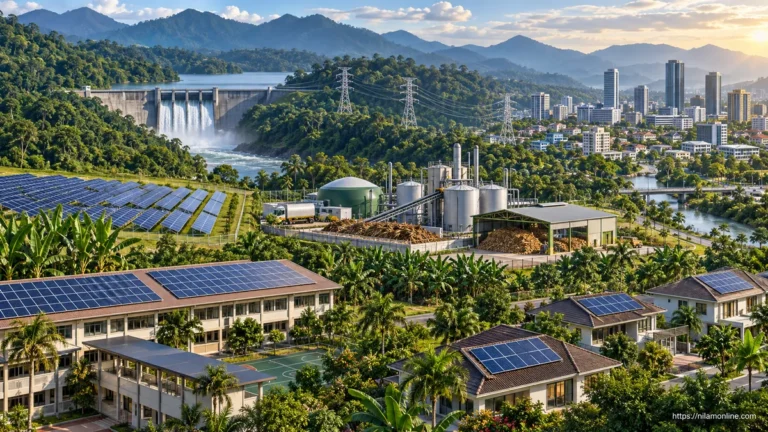
As a tropical country, it has opportunities to use solar energy. Hydropower is also part of its electricity systems. At the same time, the country faces questions about growing electricity demand, grid infrastructure, affordability and the environmental impacts of different technologies.
Malaysia introduced its National Energy Transition Roadmap (NETR) in 2023. The roadmap identifies several areas of action, including energy efficiency, renewable energy, hydrogen, bioenergy, green mobility and carbon capture, utilisation and storage. Source: IEA
The roadmap reflects an important idea: energy transition is not simply a matter of installing more solar panels.
A country needs infrastructure, skilled workers, investment, regulations and technologies that work together.
For example, installing solar panels on a school roof may reduce its reliance on electricity generated from fossil fuels. But the project still needs a suitable roof, safe wiring, proper maintenance and arrangements for electricity supply when sunlight is insufficient.
A large hydroelectric project may generate substantial electricity, but planners must also examine river ecosystems and the effects on nearby communities.
The best approach requires evidence rather than assumptions.
The Island School Makes Its Decision
Now return to the school from the beginning.
Its committee has three possible approaches.
One is to continue depending entirely on diesel generators.
Another is to install solar panels and assume that the electricity problem is solved.
The third is to study the school's actual energy needs, assess local sunlight, investigate battery storage, improve energy efficiency and design a reliable backup arrangement.
The third option requires more planning.
It may also require more information about costs and maintenance. But unlike the second option, it does not assume that a renewable source automatically solves every problem.
The committee could begin by measuring how much electricity the school uses during the day and at night.
It could investigate whether changing to efficient lighting would reduce demand.
It could compare the lifetime costs of different systems, assess the availability of qualified technicians and plan for the disposal or recycling of worn-out equipment.
Only then would the committee be able to make a well-supported decision.
This approach illustrates a central lesson of sustainability: good intentions need to be supported by good design and reliable evidence.
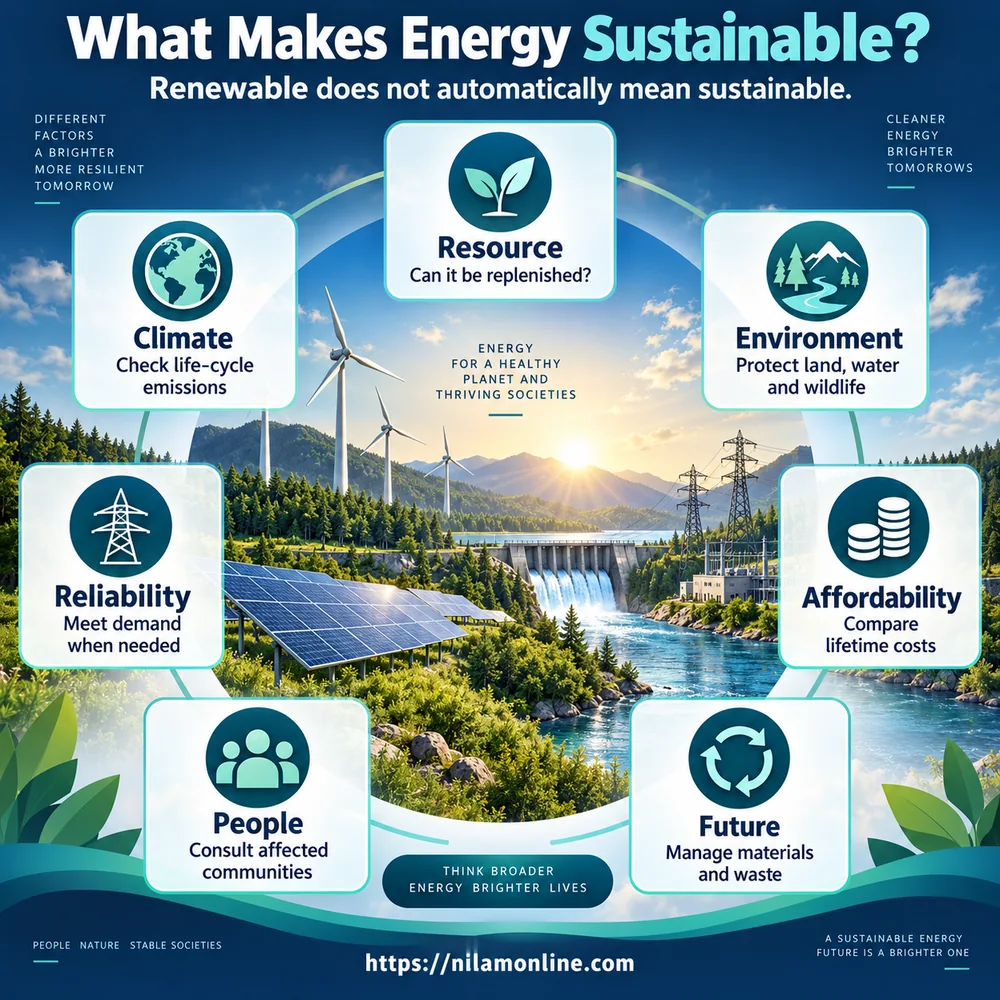
Seven Questions to Ask Before Calling Energy Sustainable
Whenever an advertisement, company or government describes an energy source as sustainable, consider the following questions:
- Resource: Can the primary energy resource be replenished at a suitable rate?
- Climate: What greenhouse gas emissions result across the system's life cycle?
- Environment: How does the project affect land, water, habitats and biodiversity?
- Reliability: Can the system meet energy demand when it is needed?
- Affordability: What are the costs of building, operating and maintaining it?
- People: Who benefits, who bears the risks and how are communities involved?
- Future: Can materials, equipment and waste be responsibly managed over time?
These questions do not produce an automatic yes-or-no answer. Instead, they create a framework for comparing alternatives.
They also help identify misleading claims.
For example, a company might advertise a system as having “zero emissions” because no fuel is burned during operation.
A more careful description might be “no direct fuel-combustion emissions during operation”, because construction and manufacturing can still cause emissions.
That difference matters.
Accurate language allows people to make informed decisions rather than relying on attractive slogans.
Energy for More Than One Generation
Sustainable energy is often imagined as a picture of green hills, sunshine and wind turbines.
Those images can represent important technologies, but sustainability is much larger than a landscape.
It involves chemistry, physics, engineering, economics, ecosystems and human choices.
A renewable resource is a valuable starting point. A low carbon footprint is another important advantage. Yet long-term sustainability also depends on delivering useful energy reliably, keeping it affordable and avoiding unnecessary harm to people and nature.
No single energy source solves every challenge in every location.
The goal is to design energy systems that perform well across these different responsibilities—and to keep improving them as new evidence and technology become available.
The island school may eventually install solar panels, improve its lighting, introduce battery storage and retain an appropriately managed backup supply. The exact solution will depend on its circumstances.
What matters most is that its decision considers more than the next electricity bill or the next sunny afternoon.
After all, an energy source is genuinely sustainable not simply when it can power our lives today, but when using it helps preserve the opportunities and wellbeing of people tomorrow.
After-Reading Activity
The Sustainable Energy Decision Challenge
You are part of a committee choosing an electricity system for a small island school.
The school needs electricity during the day and evening, has good sunlight on many days, and currently uses a diesel generator. All options below are hypothetical.
Compare the following proposals:
| Option | Proposal | Main consideration |
|---|---|---|
| A | Continue using the diesel generator | Fuel costs and emissions, but electricity can be produced when fuel and equipment are available |
| B | Install solar panels only | Lower operating emissions, but variable output and no dedicated night-time storage |
| C | Improve efficiency and combine solar, storage and an appropriate backup system | Potentially better balance of environmental performance and reliability, but more complex and costly to establish |
Which proposal would you investigate first?
Option A — Diesel generator
Option B — Solar panels only
Option C — Combined system
Explain your decision using at least three sustainability criteria.
The aim is not to select a universal winner, but to show that a strong energy decision requires evidence and a clear explanation of its trade-offs.
Uji Kefahaman
Cuba jawab tanpa melihat semula terlebih dahulu.
Aktifkan JavaScript untuk menjawab kuiz interaktif.
Fikir & Jawab
Bina Rumusan Anda
Cuba tulis 2–3 ayat menggunakan perkataan sendiri.
- Why is a renewable energy source not automatically sustainable?
- How does life-cycle assessment provide a more complete picture of an energy technology?
- Why do electricity systems with substantial solar and wind generation need flexibility?
Why is a renewable energy source not automatically sustainable? How does life-cycle assessment provide a more complete picture of an energy technology? Why do electricity systems with substantial solar and wind generation need flexibility? Explain why affordable energy and responsible treatment of communities are important to sustainability. Could two countries reasonably choose different energy systems and still pursue sustainability? Explain your answer.
Catatan ini tidak dihantar atau disimpan oleh Nilam Online. Salin catatan sendiri sebelum meninggalkan halaman jika mahu menyimpannya.
Maklumat Bacaan
- Tajuk
- What Makes an Energy Source Sustainable?
- Pengarang
- Danish A.
- Penerbit
- Edura Creative
- Tahun
- 2026
- Bahasa
- Bahasa Inggeris
- Jenis
- Artikel Web / Bahan Digital
Salin secara manual
Anda akan dibawa ke portal rasmi AINS dalam tab baharu. Nilam Online bukan portal rasmi AINS atau KPM.
Sumber bacaan
- Sustainable Development Goal 7 ↗ — United Nations
- Climate Change 2022 — Energy Systems ↗ — IPCC
- Renewable Power Generation Costs in 2024 ↗ — IRENA
- Electricity 2026: Flexibility ↗ — IEA
- Sustainable and Responsible Critical Mineral Supply Chains ↗ — IEA
- Recycling of Critical Minerals — Executive Summary ↗ — IEA
- Energy and the Environment ↗ — U.S. Energy Information Administration
- National Energy Transition Roadmap ↗ — IEA
- Natural Gas and the Environment ↗ — U.S. Energy Information Administration
- Hydropower and the Environment ↗ — U.S. Energy Information Administration